Electrical faults rarely announce themselves - they build quietly, hidden behind panels and inside connections, until the damage is already done. Thermal imaging changes that. By revealing heat patterns invisible to the naked eye, it gives engineers and technicians a powerful early warning system that can prevent equipment failure, fire hazards, and costly unplanned downtime.
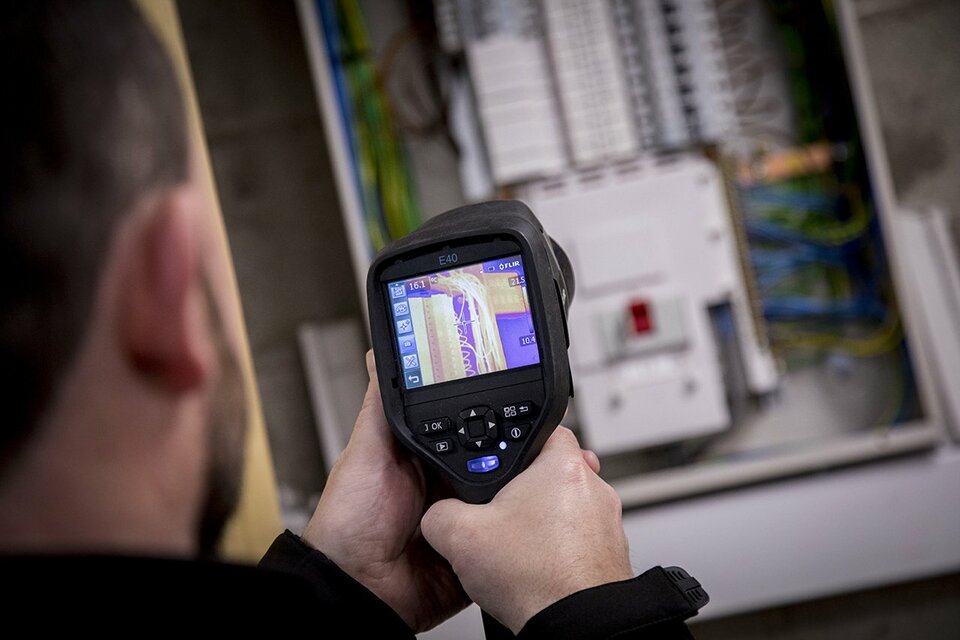
Thermal imaging - also known as infrared thermography - is a non-intrusive diagnostic method that uses specialist infrared cameras to detect heat emitted by electrical components. Every object above absolute zero emits infrared energy, and the level of that emission varies with temperature. Thermal cameras capture this radiation and convert it into a visible image called a thermogram.
In a thermogram, hotter areas appear in reds and whites, while cooler areas show up in blues and greens. This colour contrast allows technicians to quickly spot abnormal heat patterns that may indicate an underlying fault - long before it becomes a serious problem.
Thermal imaging is widely applied in preventative maintenance and condition monitoring across a broad range of electrical systems. Common inspection targets include:
The technique is especially effective at identifying issues such as loose or high-resistance connections, overloaded circuits, component degradation, overheating cables, and phase imbalances.
The real value of thermal imaging lies in what it prevents. Key benefits include:
Early fault detection. Problems are identified before they escalate into equipment failure or fire hazards, giving maintenance teams time to act on their own terms rather than in a crisis.
Non-intrusive inspection. Because thermal cameras work at a safe distance and require no physical contact with live equipment, inspections can be carried out without shutting down systems - reducing both risk to personnel and disruption to operations.
Cost-effective maintenance. Catching faults early prevents unplanned downtime and extends the operational lifespan of equipment, delivering real long-term savings.
To get the most from a thermal imaging survey, there are a few important principles to follow:
Thermal imaging is one of the most effective tools available for proactive electrical maintenance. It's fast, safe, and non-disruptive - and the insights it provides can be the difference between a routine maintenance job and an emergency. When used alongside a comprehensive testing programme, it gives building owners, facilities managers, and electrical engineers the confidence that their systems are running safely and efficiently.
Interested in arranging a thermal imaging survey? Get in touch with our team to find out how we can help protect your electrical infrastructure.

phs Compliance began working with our 'Big Four' food and grocery retail customer in 2009, delivering fixed wire and portable appliance inspection and testing services across one hundred per cent of

phs Compliance were commissioned to replace 135 existing multi-storey car park overhead lights and emergency exit signs with new energy-saving LED lights combined with motion sensors. The car park
phs Compliance began working with our Tier 1 facilities management provider delivering electrical safety compliance services across two large hospital sites within the UK’s largest NHS Trust. With

phs Compliance deliver, nationwide, a range of mechanical maintenance services for our customer, a specialist treatment provider to the NHS. Our customer carries out over 500, 000 treatments every
This site uses cookies that enable us to make improvements, provide relevant content, and for analytics purposes. For more details, see our Cookie Policy. By clicking Accept, you consent to our use of cookies.
