
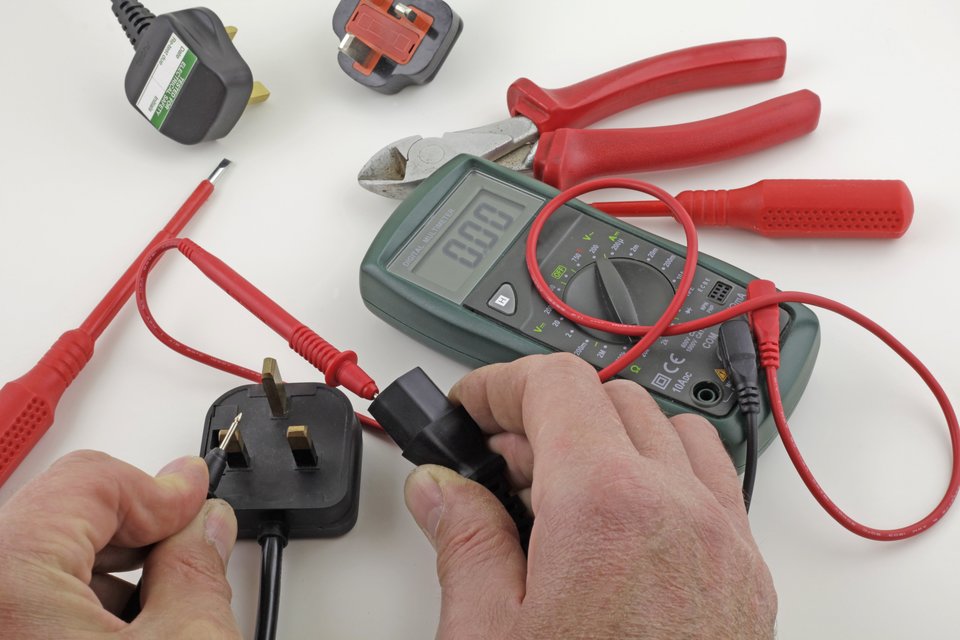
Portable Appliance Testing (PAT) plays plays a crucial role in maintaining electrical safety in the workplace, and one that is a necessity from a compliance standpoint, especially when it comes to audits. But when it comes to actually carrying out the test, many businesses find themselves asking: Who can PAT test? Do you need to be an electrician? Are qualifications required? And who can legally do PAT testing?
If you’ve ever wondered who can undertake PAT testing and what the regulations say, this guide will help you understand the requirements so you can ensure your workplace remains safe, compliant, and efficiently running.
PAT testing, or Portable Appliance Testing, is the process of checking electrical appliances for safety through a combination of visual inspections and electronic tests. This includes plug-in devices from kettles and computers to extension leads and power tools. A PAT test certifies appliances, and equipment is safe to use and not at risk of causing an electric shock or fire.
You may have also heard of Electrical Equipment Testing (EET) which is the newer broader term that covers all in-service inspection and testing of electrical equipment in the workplace. PAT and EET are essentially the same test, EET can cover less portable equipment, but the process is exactly the same.
Although there’s no legal obligation to carry out PAT testing at specific intervals, UK health and safety regulations (including the Electricity at Work Regulations 1989) require employers to maintain equipment in a safe condition and PAT testing is a recognised way to meet this responsibility. You can read more in our ultimate guide to PAT testing.
So, who can PAT test equipment? The short answer is anyone who is deemed “competent.”
The Health and Safety Executive (HSE) states that a competent person must have:
In other words, while you don’t need to be a fully qualified electrician to carry out PAT testing, but you must have the appropriate training and understanding of what you’re doing.
For more complex or high-risk appliances e.g. 3-phase equipment such as air conditioning units, electric car chargers or industrial machinery, it’s recommended that testing is carried out by someone with higher-level electrical qualifications or a professional PAT testing service.
Legally, there’s no strict requirement for PAT testers to be registered or hold specific certifications, but the responsibility still lies with the employer or landlord to make sure testing is done properly and safely. For safety, it is best that one of the following people be employed, who can undertake PAT testing:
While DIY PAT testing may seem cost-effective, it’s often safer and more reliable to use a certified service that can offer proper record-keeping, calibrated equipment, and experienced engineers.
Reach Out To A Certified phs Professional
For basic items such as small office appliances, a low-risk environment may only require a trained staff member using a PAT tester and following manufacturer guidelines.
However, many businesses choose to send their staff on a short PAT testing course to gain the necessary training. These courses typically cover:
Courses result in a certificate of competence, although this isn’t a formal legal requirement, it simply demonstrates due diligence and best practice and gives the trained person validation of their attainment.
Whether conducted in-house or via a third party, PAT testing should follow a consistent procedure. This includes:
These steps are essential to prove compliance in the event of a health and safety inspection or insurance claim.
After a PAT test is completed, the person conducting the test should provide:
While the certificate itself is not a legal document, it serves as evidence that proper checks have been carried out. This is a key requirement for demonstrating compliance with UK workplace safety laws.
At phs Compliance, we take the guesswork out of PAT testing. Our accredited engineers are fully trained, insured, and equipped with advanced testing equipment to ensure your appliances are safe and compliant.
We offer:
No matter your business size or sector, we help you meet your legal duties and keep your staff and customers safe.
Let phs Compliance take the lead with professional, efficient, and fully certified PAT testing services tailored to your business.
We also offer EICR reports, thermographic surveys, fire safety services and remedial works, so you can have a a huge range of electrical services along with PAT Testing from one provider. Get in touch to find out more about our services or to book a free PAT test quote today.
Get a free no-obligation quote for your PAT test service today

phs Compliance began working with Westminster Abbey in 2015, delivering electrical fixed wire, portable appliance and emergency lighting inspection and testing services across Westminster Abbey’s

Our client’s transport division helps ensure UK railways, motorways, roads and airports run safely and smoothly supported by engineering design, construction, installation and maintenance services.

Engaged by a Tier 1 FM provider, phs Compliance supported the train operator client with a major electrical remedial project. The requirement was to attend and rectify remedial works across 262 rail

phs Compliance successfully won through competitive tendering a major electrical project at a large and fully operational police station. The work involved installing and commissioning a new
This site uses cookies that enable us to make improvements, provide relevant content, and for analytics purposes. For more details, see our Cookie Policy. By clicking Accept, you consent to our use of cookies.
