

phs Compliance partnered with a leading healthcare university organisation operating across multiple locations in Central and North West London to deliver a comprehensive Portable Appliance Testing (PAT) programme. Working within a live environment that supports both healthcare services and education, the project required careful planning, strict adherence to safety protocols, and minimal disruption to patients, staff, students and clinical operations.
Our specialist team provided a fully managed PAT service across the estate, ensuring electrical equipment remained safe, compliant and audit-ready while supporting the organisation's commitment to safety, operational efficiency and regulatory compliance.
The organisation manages a large and complex estate that includes healthcare facilities, clinical environments, teaching spaces, laboratories, offices and public areas. With thousands of electrical devices in daily use, maintaining electrical safety compliance is essential to protect patients, employees, students and visitors.
The client required a trusted compliance partner capable of delivering PAT testing across a busy operational environment without disrupting clinical services, teaching activities or critical equipment usage. The programme needed to provide accurate asset tracking, clear reporting and complete certification to support ongoing audits and compliance requirements.
In addition, all works had to align with strict site access procedures, safeguarding requirements, infection prevention protocols and the organisation's wider health and safety standards.
Delivering PAT testing across a live healthcare and university estate presented several unique challenges. Testing activities needed to be carefully coordinated around patient care, clinic schedules, treatment times and academic activities to avoid unnecessary disruption.
Many areas contained critical equipment that could not be taken out of service during operating hours, requiring flexible scheduling and close collaboration with Estates teams and local departmental leads.
Maintaining high standards of hygiene and infection prevention was also essential, particularly within clinical and patient-facing environments. Engineers needed to operate discreetly while adhering to site-specific protocols, safeguarding requirements and security procedures.
Accurate asset tracking and reporting across multiple departments further added to the complexity of the project.
phs Compliance implemented a carefully structured and fully managed PAT testing programme tailored to the organisation's operational requirements.
Working closely with Estates teams and local ward and service managers, testing schedules were developed to align with clinical operations, teaching activities and equipment availability. Where required, attendance was flexed to include out-of-hours working to reduce footfall in sensitive areas and minimise disruption.
All works were delivered in accordance with Health Technical Memorandum (HTM) 06-02 Electrical Safety Guidance for Low Voltage Systems, with project-specific Risk Assessments and Method Statements (RAMS) developed for the estate. Activities were carefully coordinated with the relevant Authorised Persons (APs), incorporating robust safe isolation and lock-off procedures where required.
phs Compliance DBS-certified PAT Engineers also adhered to excellent standards of infection prevention and control in line with HTM 01-05 guidance, ensuring safe working practices within clinical, laboratory and patient-facing environments.
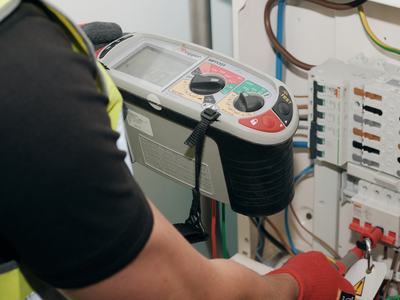
Each appliance underwent a thorough visual inspection alongside an electrical safety test using calibrated testing equipment. Assets were recorded by location and department and fitted with uniquely numbered pass labels to provide full traceability.
Where equipment failed inspection or testing, it was immediately labelled "Do Not Use", made safe and escalated to the nominated site contact. This ensured corrective action could be taken quickly with minimal impact on day-to-day operations.
Following completion, phs Compliance provided comprehensive certification and a detailed asset register, supporting ongoing compliance management and audit readiness.
The PAT programme enabled the organisation to maintain high standards of electrical safety across its healthcare and educational environments while minimising operational disruption.
A carefully coordinated delivery approach ensured testing activities took place around patient services, clinics and academic schedules, allowing day-to-day operations to continue uninterrupted.
The organisation benefits from a fully documented asset register, improved visibility of electrical equipment across the estate and clear reporting to support future maintenance planning.
Comprehensive certification provides confidence that electrical appliances have been inspected and tested in accordance with current requirements, helping support compliance obligations and audit preparedness.
By identifying and removing unsafe equipment from service promptly, the programme also contributed to reducing electrical risks and enhancing safety for patients, staff, students and visitors.
This project demonstrates how phs Compliance can successfully deliver Portable Appliance Testing within highly regulated healthcare and educational environments. Through careful planning, flexible delivery and a strong focus on safety, compliance and operational continuity, the organisation has been able to maintain a safe, compliant and audit-ready estate without compromising patient care, teaching activities or day-to-day operations.
Drawing on extensive experience within the healthcare sector, phs Compliance has successfully delivered electrical compliance services across 214 NHS Trusts and private healthcare estates to date. This breadth of expertise enables our teams to understand the unique operational, safety and compliance requirements of healthcare environments, ensuring works are delivered efficiently, safely and in line with industry best practice.
The result is a robust electrical safety programme that supports regulatory compliance, protects building users and provides complete visibility of assets across a complex estate.

A lot of bad advice can get repeated as fact when it comes to electrical and fire safety. Some compliance myths start with a grain of truth, then get simplified until they become misleading, and

Waiting until something goes wrong often costs more, causes more disruption and costs more than ensuring your appliances are in working order. Not only that, but it can also make it harder to keep

Safety checks and sustainability work are, understandably, treated as separate jobs, but there's actually more overlap between them than people expect. A well-maintained building tends to run more
Amendment 4 to BS 7671 is now published and in force. From 15th October 2026, it becomes the only standard that counts. Here’s what’s changed and what you need to do. Key deadline: 15 October
This site uses cookies that enable us to make improvements, provide relevant content, and for analytics purposes. For more details, see our Cookie Policy. By clicking Accept, you consent to our use of cookies.
