

Installation works in a highly operational hospital environment is one of the biggest challenges faced by our engineers and by our customers’ site estates team. Working in live clinical areas requires in-depth careful planning & contract management so that works are completed quickly and efficiently. When working with electrical circuits it is always necessary to isolate power which requires additional considerations when working within an hospital environment.
Clinical staff are fully briefed about and aware of these temporary restrictions. Drilling is scheduled flexibly causing minimal disturbance and disruption to patients. Our investigations revealed that some emergency light panels situated above heating systems would not be compliant with Trust H&S obligations. We recommended alternative lighting systems - fit for purpose - for installation, and our recommendations were adopted.
Replacing & testing new emergency lighting systems across a variety of buildings requires the full cooperation of Trust staff so that works can be planned, project-managed and delivered within agreed SLA’s. Completing essential drilling works with minimal disruption was planned jointly to benefit from patient re-location & non-core hours. Scheduling works to coincide with annual deep cleaning programmes is also an option when necessary.

A lot of bad advice can get repeated as fact when it comes to electrical and fire safety. Some compliance myths start with a grain of truth, then get simplified until they become misleading, and

Waiting until something goes wrong often costs more, causes more disruption and costs more than ensuring your appliances are in working order. Not only that, but it can also make it harder to keep

Safety checks and sustainability work are, understandably, treated as separate jobs, but there's actually more overlap between them than people expect. A well-maintained building tends to run more
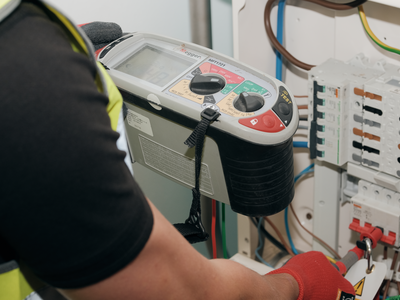
Amendment 4 to BS 7671 is now published and in force. From 15th October 2026, it becomes the only standard that counts. Here’s what’s changed and what you need to do. Key deadline: 15 October
This site uses cookies that enable us to make improvements, provide relevant content, and for analytics purposes. For more details, see our Cookie Policy. By clicking Accept, you consent to our use of cookies.
