
We have been providing compliance services since 1991 and currently have over 246 qualified engineers working across the UK.
Our commercial compliance services include everything from PAT testing to large project services. Every year we carry out over 9 million PATS and 770,000 Fixed Wire Tests.
All of our services are tailored to suit the needs of our clients, allowing us to ensure their premises are safe and compliant for employees and visitors.
Our services deliver meaningful impact across a wide range of industries, including retail, manufacturing, education, facilities management, and the public sector

Delivering compliance and building engineering services nationwide since 1991, phs Compliance forms part of the phs Group, a leading supplier of workplace services across the UK for over fifty

Our professional supplier accreditations give you peace of mind that phs Compliance is fully accredited by leading supply chain verification platforms to rigorous pre-qualification standardsOur

At phs Compliance, we recognise that our services not only support the technical needs of workplaces but fundamentally impact the lives of the people within them. We design our compliance solutions

At phs Compliance, we are deeply committed to upholding the ESG (Environmental, Social, and Governance) principles set forth by our parent company, phs Group . Our teams at phs Compliance and JPen

A lot of bad advice can get repeated as fact when it comes to electrical and fire safety. Some compliance myths start with a grain of truth, then get simplified until they become misleading, and

Waiting until something goes wrong often costs more, causes more disruption and costs more than ensuring your appliances are in working order. Not only that, but it can also make it harder to keep

Safety checks and sustainability work are, understandably, treated as separate jobs, but there's actually more overlap between them than people expect. A well-maintained building tends to run more
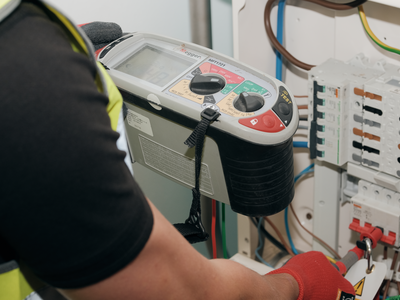
Amendment 4 to BS 7671 is now published and in force. From 15th October 2026, it becomes the only standard that counts. Here’s what’s changed and what you need to do. Key deadline: 15 October
This site uses cookies that enable us to make improvements, provide relevant content, and for analytics purposes. For more details, see our Cookie Policy. By clicking Accept, you consent to our use of cookies.
