
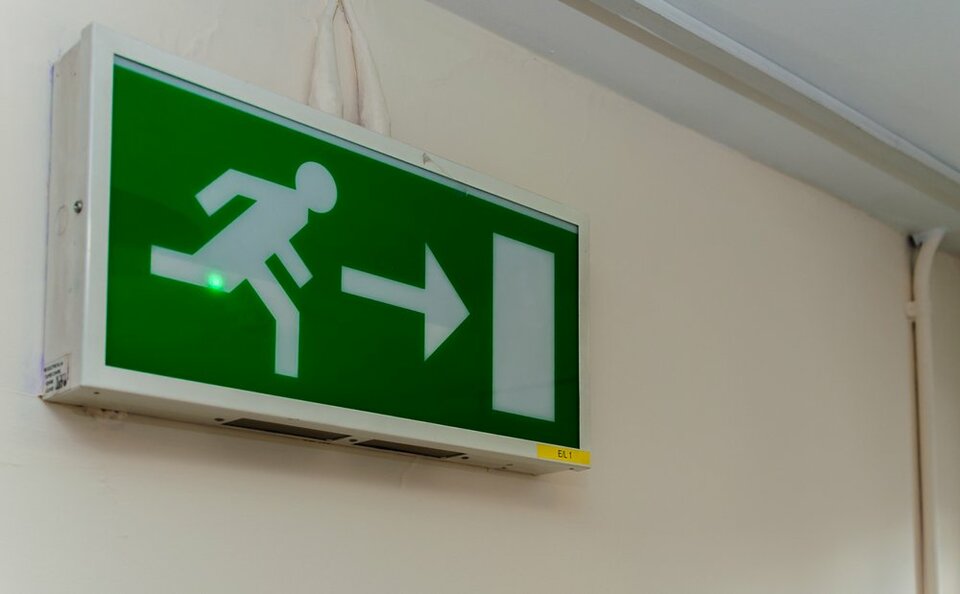
Emergency lighting is an essential safety consideration for commercial buildings. If you’re a building manager, you need to understand BS 5266 guidance. This standard outlines a code of practice for the design and electrical installation of lighting systems that safeguard building users in the event of a power outage.
What are the emergency lighting regulations in the UK? Emergency lighting offers a backup in case your main systems cut out due to a power failure. Its purpose is to ensure people can exit your building safely in the event of a blackout.
Your emergency lighting design should include:
BS 5266 covers the implementation of your emergency lighting system, ensuring it’s correctly installed and laying out emergency lighting testing requirements. As well as being a legal requirement, BS 5266 compliance establishes best practices for building safety, ensuring you meet the minimum standards.
The Fire Safety Order applies to almost all buildings. Privately owned homes are excluded, but the order does apply to HMOs and blocks of flats.
As the “responsible person” for a building, you must undertake a Fire Risk Assessment, a mandatory requirement to identify fire risks and hazards. It’s also your legal duty to keep a record and take appropriate action.
You are also required to ensure your premises reach the required fire safety standards and that employees receive fire safety training. As part of your legal obligation, you must also test and maintain emergency lighting systems for fire safety compliance.
BS 2566-1 and BS EN 50172 require you to regularly test your emergency lighting, logging all test results and ensuring any necessary repairs are carried out. You must also keep installation drawings on the premises.
There are several schedules to be aware of when testing your emergency lighting.
Accredited professionals are required to undertake Emergency Lighting Testing, and any remedial work must be carried out as soon as possible.
Take a look at our guide for more information on what emergency lighting testing is and how it works.
As a responsible person, you have a duty to maintain emergency lighting compliance. Beyond scheduling monthly ‘flick’ testing and your annual full duration test, you need to ensure that your emergency lighting design is fit for purpose:
Upgrading to modern LED emergency lighting could transform your compliance. Although an LED emergency lighting upgrade comes with a higher upfront cost, the ongoing energy savings more than make up for it.
LED luminaires are an environmentally friendly light source, consuming 75% less energy than competing systems. With a lifespan of up to 10,000 hours, LED emergency lighting improves system reliability and requires less frequent replacement compared to incandescent light sources. As a result, your durable emergency lighting is virtually maintenance-free, for operational savings and improved efficiency.
Interested in emergency lighting that reduces your carbon footprint and offers improved lighting quality? We can help you implement an LED emergency lighting upgrade that complies with BS 5266-1:2016 standards for design and installation, reducing your bills and maintenance costs.
BS 5266 compliance is essential for commercial emergency lighting. That’s why we offer a complete range of testing and installation services, including our LED Lighting Project Service.
Whether you’re ready for an LED upgrade or need an annual testing certificate, why not make phs Compliance your trusted partner? We can design and install standard or LED emergency lighting systems that meet and exceed your legal compliance requirements.
Contact us today or use our straightforward form to get a quote.

Part of a 170-strong nationwide estate, the Yorkshire HMRC site provides taxation services for individuals and corporations along with secure data centre operations. PHS Compliance began delivering

Through competitive tendering with one of our major facilities management customers, phs Compliance was awarded a major contract delivering comprehensive electrical, fire and gas safety inspection

Through our Tier 1 facilities management customer, we delivered mechanical installation and project works to one of their clients, the worlds’ largest provider of flexible workspace solutions with

Through our Tier 1 facilities management client, phs Compliance self-delivered project services for the installation and commissioning of replacement emergency lighting to support one of two acute
This site uses cookies that enable us to make improvements, provide relevant content, and for analytics purposes. For more details, see our Cookie Policy. By clicking Accept, you consent to our use of cookies.
